


 Cart
Cart
 sales@molnova.com



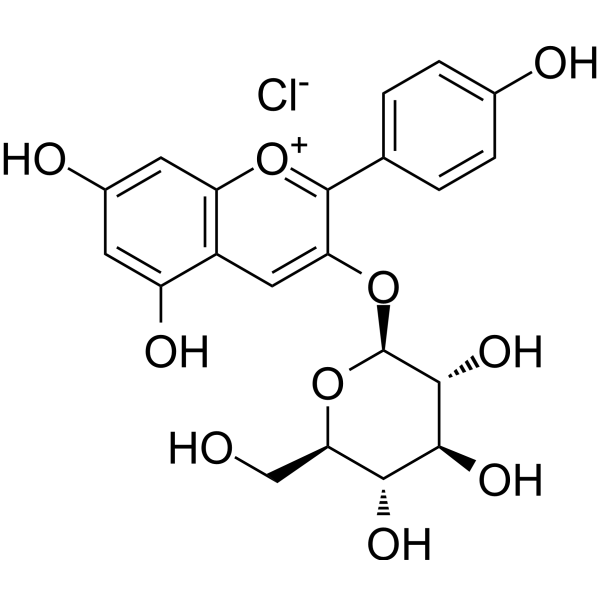
Pelargonidin-3-O-glucoside chloride
CAS No. 18466-51-8
Pelargonidin-3-O-glucoside chloride( —— )
Catalog No. M31219 CAS No. 18466-51-8
Pelargonidin-3-O-glucopyranoside is the glucoside of Pelargonidin, an potential antidiabetic agent. Pelargonidin-3-O-glucopyranoside has antioxidant, anti-inflammatory, anti-estrogenic, and angiotensin-converting enzyme inhibitory activities.
Purity : >98% (HPLC)
 COA
Datasheet
HNMR
HPLC
MSDS
Handing Instructions
COA
Datasheet
HNMR
HPLC
MSDS
Handing Instructions
| Size | Price / USD | Stock | Quantity |
| 5MG | 342 | In Stock |


|
| 50MG | Get Quote | In Stock |
|
| 100MG | Get Quote | In Stock |
|
Biological Information
-
Product NamePelargonidin-3-O-glucoside chloride
-
NoteResearch use only, not for human use.
-
Brief DescriptionPelargonidin-3-O-glucopyranoside is the glucoside of Pelargonidin, an potential antidiabetic agent. Pelargonidin-3-O-glucopyranoside has antioxidant, anti-inflammatory, anti-estrogenic, and angiotensin-converting enzyme inhibitory activities.
-
DescriptionPelargonidin-3-O-glucopyranoside is the glucoside of Pelargonidin, an potential antidiabetic agent. Pelargonidin-3-O-glucopyranoside has antioxidant, anti-inflammatory, anti-estrogenic, and angiotensin-converting enzyme inhibitory activities.
-
In Vitro——
-
In Vivo——
-
Synonyms——
-
PathwayOthers
-
TargetOther Targets
-
Recptor——
-
Research Area——
-
Indication——
Chemical Information
-
CAS Number18466-51-8
-
Formula Weight468.8
-
Molecular FormulaC21H21O10Cl
-
Purity>98% (HPLC)
-
Solubility——
-
SMILES——
-
Chemical Name——
Shipping & Storage Information
-
Storage(-20℃)
-
ShippingWith Ice Pack
-
Stability≥ 2 years
Reference
molnova catalog



related products
-
Peonidin-3-O-galacto...
Peonidin-3-O-galactoside chloride has antioxidant activity.
-
Tyramine hydrochlori...
Tyramine hydrochloride is a biogenic trace amine that is generated via the decarboxylation of the amino acid tyrosine?exhibiting neuromodulatory properties as well as cardiovascular and immunological effects.
-
Simufilam dihydrochl...
Simufilam dihydrochloride is a low toxicity, orally active filamin A (FLNA) activator, which can be used for the research of Alzheimer's disease.
